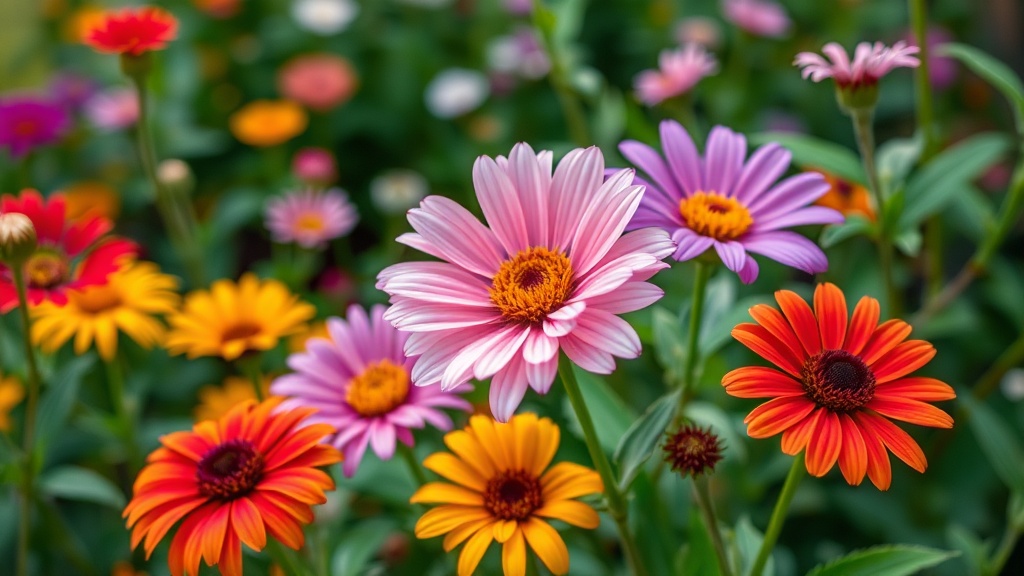
5 Easy Perennial Flowers That Bloom All Summer for a Vibrant Garden

Coneflowers (Echinacea)
Black-eyed Susans (Rudbeckia)
Russian Sage
Shasta Daisies
Salvia
What This Post Covers (And Why Your Garden Needs These Flowers)
Annuals drain your wallet. Every spring, you're back at the nursery dropping cash on plants that'll die come frost. Perennials that bloom all summer solve this problem completely—plant them once, and they'll return year after year with steady color from June through September. This guide breaks down five low-maintenance perennial flowers that deliver non-stop blooms without demanding constant attention. Whether you're filling a new bed, replacing tired annuals, or just want a garden that works harder than you do, these varieties won't let you down.
Which Perennial Flowers Bloom the Longest?
Black-eyed Susans (Rudbeckia), coneflowers (Echinacea), and coreopsis top the list for the longest-blooming perennials in most North American gardens. These tough plants start flowering in early summer and keep producing blooms until the first hard frost—often 12 to 16 weeks of continuous color.
The secret lies in their growth habit. Unlike spring-blooming perennials (think peonies or bleeding hearts) that flower once and call it a season, these summer warriors produce buds on new growth throughout the season. Deadheading spent blooms encourages even more flowers—though even without this step, they'll keep producing.
Here's the thing: bloom time varies by climate. In zone 5 gardens, black-eyed Susans might start in July. In zone 7, they could begin in late June. The key is selecting varieties bred for extended bloom rather than older heirloom types that might fizzle out by August.
5 Easy Perennial Flowers That Bloom All Summer
1. Black-Eyed Susan (Rudbeckia fulgida 'Goldsturm')
If there's one perennial that deserves a spot in every sunny garden, it's 'Goldsturm.' This variety has dominated perennial borders since its introduction in 1937—and for good reason.
The plant forms tidy clumps 18 to 24 inches tall, with dark green foliage that stays attractive even when not in bloom. Bright yellow petals surround chocolate-brown cone centers from July through October. Butterflies and bees flock to the flowers; goldfinches arrive later to pick at the seed heads.
Plant 'Goldsturm' in full sun with well-draining soil. Once established, it tolerates drought without complaint. Divide clumps every three to four years in early spring to maintain vigor. One caveat: in rich, heavily fertilized soil, the plants grow floppy and require staking. Skip the Miracle-Gro and let them tough it out.
2. Coneflower (Echinacea purpurea)
Native to the American prairie, purple coneflower has earned its place in the garden hall of fame. The straight species reaches 3 to 4 feet with pink-purple petals drooping from coppery-orange centers. New hybrid varieties offer colors ranging from white ('White Swan') to electric orange ('Tiki Torch') to fiery red ('Hot Papaya').
Coneflowers bloom from June through August in most regions, with some varieties pushing into September. They're absolute workhorses in hot, dry spots where other plants surrender. Once established, their deep taproots mine moisture from well below the soil surface.
The catch? Many of the fancy new hybrids don't return reliably. Stick with tried-and-true varieties or recent introductions from reputable breeders like Walter's Gardens if you want plants that survive winter and return strong. 'PowWow Wild Berry' offers exceptional flower power on compact 20-inch plants—perfect for smaller gardens.
3. Coreopsis (Tickseed)
Threadleaf coreopsis (Coreopsis verticillata) produces clouds of bright yellow, star-shaped flowers on airy, fern-like foliage. 'Moonbeam' remains the standard-bearer—pale yellow blooms on 18-inch plants that spread into informal mounds. For bolder color, 'Zagreb' delivers golden-yellow flowers on slightly shorter plants with the same delicate texture.
These plants bloom from late spring through fall, especially when sheared back by one-third in mid-July. The cut rejuvenates the plant and triggers a fresh flush of flowers that lasts until frost.
Coreopsis demands excellent drainage. Heavy clay soils kill it dead—amend with compost or plant in raised beds. Once you get the drainage right, though, this perennial practically runs itself. Deer typically ignore it, and pests don't bother.
4. Salvia (Meadow Sage)
For spikes of intense blue that rival any annual, plant Salvia nemorosa 'May Night' or 'Caradonna.' These compact perennials reach 18 to 24 inches and produce vertical flower wands from late spring through summer. Remove spent spikes, and secondary blooms extend the show into early fall.
Salvias thrive in full sun and average soil. They laugh at heat and humidity that wilts lesser plants. The dark purple stems of 'Caradonna' add visual interest even when not in bloom—worth noting for gardens viewed from patios or walkways.
Plant salvias in groups of three or five for impact. Their upright habit contrasts beautifully with mounding perennials like coneflower and black-eyed Susan. Hummingbirds and butterflies adore them; rabbits usually leave them alone.
5. Blanket Flower (Gaillardia x grandiflora)
Blanket flowers deliver the saturated reds and yellows of annual zinnias with perennial staying power. 'Arizona Sun'—an All-America Selections winner—produces 3-inch daisy-like blooms in hot red and gold from early summer through frost. Plants stay compact at 12 to 14 inches, making them ideal for front-of-the-border placement.
These southwestern natives crave sun and sharp drainage. Wet winter soil rots the crown, so plant them on slopes, in raised beds, or mix into rock gardens. Once established, blanket flowers are remarkably drought-tolerant—perfect for regions with watering restrictions.
Deadheading isn't strictly necessary, but it keeps plants tidy and encourages more blooms. Some varieties self-seed enthusiastically—'Burgundy' is notorious for this—so remove spent flowers before seeds mature if you don't want volunteers.
What Is the Lowest Maintenance Perennial Flower?
Black-eyed Susan 'Goldsturm' ranks as the lowest-maintenance summer-blooming perennial for most gardens. It tolerates drought, poor soil, heat, and humidity while producing months of flowers with zero intervention.
That said, "low maintenance" depends on your conditions. In the Pacific Northwest, salvia might struggle with wet winters while asters thrive. In Arizona, blanket flowers outlast almost everything else. Match the plant to your climate, and maintenance drops dramatically.
All five perennials on this list share common traits that reduce upkeep: deep roots that find their own water, natural disease resistance, and minimal fertilizer needs. Skip the chemical feeding—most perennials bloom better in lean soil. A 2-inch layer of shredded bark mulch applied in spring keeps weeds down and soil moisture consistent.
Quick Comparison: Which Perennial Fits Your Garden?
| Flower | Bloom Time | Height | Best For | Deer Resistance |
|---|---|---|---|---|
| Black-Eyed Susan 'Goldsturm' | July–October | 18–24" | Beginners, cutting gardens | High |
| Coneflower | June–September | 24–36" | Pollinator gardens, hot dry spots | High |
| Coreopsis 'Moonbeam' | May–September | 18" | Informal borders, cottage gardens | High |
| Salvia 'Caradonna' | May–August | 18–24" | Formal plantings, vertical accents | Moderate |
| Blanket Flower 'Arizona Sun' | June–Frost | 12–14" | Rock gardens, front of border | Moderate |
How to Plant Perennials for Maximum Summer Blooms
Timing matters. Spring planting gives perennials a full season to establish roots before winter. Fall planting works in zones 6 and warmer, provided you get plants in at least six weeks before first frost. Avoid summer planting unless you're willing to water religiously.
Dig holes twice as wide as the root ball but no deeper. Planting too deep kills more perennials than anything else—the crown (where stems meet roots) should sit at soil level. Backfill with native soil mixed with compost—skip the peat moss and other amendments that create a "bathtub" effect where roots won't escape into surrounding soil.
Water thoroughly after planting, then monitor soil moisture weekly for the first growing season. Once established, these five perennials need watering only during extended drought—typically less than once a week, even in midsummer. Overwatering causes more problems than underwatering.
"The best fertilizer is the gardener's shadow." — Old gardening proverb
Spend time observing your plants. Yellow leaves often indicate overwatering or poor drainage. Leggy growth with few flowers means too much shade or nitrogen. Staking usually signals over-fertilization—plants growing too fast for their stems to support.
Design Tips for a Summer-Long Display
Single-variety plantings look flat. Combine plants with different heights, textures, and bloom shapes for visual interest. Try this formula: tall coneflowers at the back, mid-height black-eyed Susans and salvias in the middle, low blanket flowers at the front, with threadleaf coreopsis weaving throughout.
Include some ornamental grasses—'Karl Foerster' feather reed grass or blue fescue—for texture contrast. Grasses also provide structure when flowers fade in late fall.
Worth noting: all five perennials on this list work beautifully in containers. Use a high-quality potting mix like Miracle-Gro Potting Mix (yes, it has fertilizer—but container plants need it) and choose pots at least 12 inches wide for proper root development. Water containers more frequently than in-ground plantings; they dry out faster.
With these five perennials, you'll build a garden that delivers color from the first barbecue of summer through the last fall football party. Plant them once. Enjoy them for years.