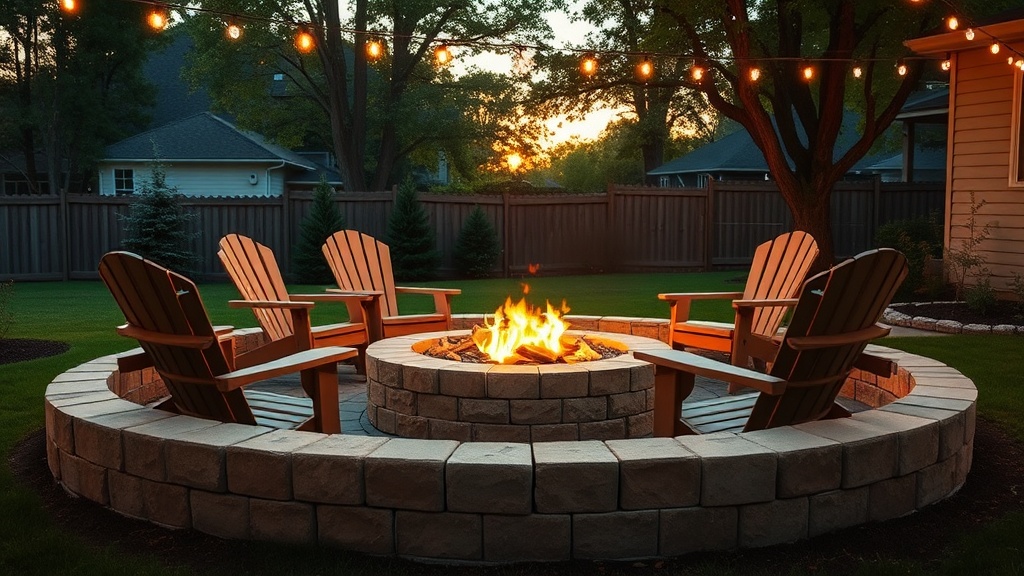
Build a Fire Pit This Weekend: Complete DIY Guide (Under $175)

Here's the deal—building a fire pit is one of the best backyard projects you can tackle. It costs less than a fancy dinner out, takes one Saturday afternoon, and you'll use it for years. I built the one in my yard three years ago and we fire it up from September through April. Best $150 I ever spent on this property.
This guide shows you how to build a solid, safe fire pit using retaining wall blocks. No mortar, no special skills, no permit needed in most places. Just a shovel, a level, and some patience.
What You're Building
A 40-inch inner diameter fire pit using retaining wall blocks. This size works great for most backyards—big enough for a real fire, small enough to fit on a standard patio or yard space. You can roast marshmallows around this thing. I've done it plenty of times.
What You'll Need
Materials
- 36 retaining wall blocks (approximately 4" x 11.5" x 7") — $2.50-$3.50 each = $90-126
- 6 bags of drainage gravel (0.5 cubic foot bags) — $4-5 each = $24-30
- 1 bag of paver sand (optional, for leveling) — $5-7
- Total materials: $120-165
Note: Prices vary by region and season. Check your local Home Depot or Lowe's—lumber and block prices have been fluctuating. This estimate is current as of February 2026.
Tools
- Shovel
- Tape measure
- 4-foot level (or longer if you have one)
- Rubber mallet
- Stakes and string (or a long extension cord works in a pinch)
- Safety glasses
- Work gloves
- Wheelbarrow (or strong friend to move blocks)
Time Estimate
4-6 hours for one person, faster with help. That includes driving to the store, unloading materials, and cleanup. If you've never done this before, budget the full 6 hours. If you've got a buddy and a truck, you could knock this out in 3-4.
Before You Start: Critical Safety Notes
Don't skip this section. Seriously.
Location matters:
- 20 feet minimum from your house, deck, or any structure. I don't care what the internet says—20 feet. Embers travel.
- 10 feet minimum from fences, trees, or overhanging branches
- Check overhead: No low tree branches, no power lines, no nothing that can catch fire
- Check underground: Call 811 before you dig. It takes two days and it's free. Hit a gas line and you're having a very bad weekend.
Local codes: Most suburban areas don't require permits for fire pits, but some do. Check your city or HOA rules. In my area, you're good if it's under 3 feet in diameter and not a permanent structure. Your mileage may vary.
Step-by-Step Instructions
Step 1: Mark Your Circle
Drive a stake in the ground where you want the center of your fire pit. Tie a string to it—20 inches long for a 40-inch diameter pit. Walk around in a circle marking the ground with spray paint or flour. That's your inner circle.
Now mark a second circle 12 inches outside that one. That's where your blocks will sit. You should have a ring marked on the ground.
Stand back and look at it. Is it clear of everything? Are you happy with the location? Good. Let's dig.
Step 2: Dig the Base
Remove the sod and dig down about 4-6 inches inside your outer circle. You're not going crazy here—just enough to get below the grass and into stable soil. The goal is a flat, level surface for your base layer of blocks.
Pro tip: Save that sod if your yard needs patching elsewhere. Or just toss it—your call.
Step 3: Level and Compact the Base
This is the step everyone wants to rush. Don't. A level base means your fire pit won't wobble or settle weird after the first rain.
Add 2-3 inches of your drainage gravel to the bottom. Spread it out and tamp it down. You can rent a plate compactor, but honestly, a piece of 4x4 lumber and some elbow grease works fine for a fire pit this size.
Now check for level. Lay your 4-foot level across the base in multiple directions. High spots get scraped down; low spots get more gravel. Take your time here. An extra 15 minutes of leveling saves you from a crooked fire pit for the next five years.
Don't skip this step. Ask me how I know.
Step 4: Lay the First Course of Blocks
Place your first layer of blocks on the compacted gravel. You want 12 blocks for the first course, spaced evenly around the circle. The back of each block should face inward (toward the fire).
Check each block with your level as you go. Tap them into place with the rubber mallet. They should sit solid with no rocking.
Step back and look at your circle. Is it round? Are the gaps between blocks fairly even? Adjust as needed. This first course determines everything that comes after.
Step 5: Build the Second and Third Courses
Stack your second course on top of the first, but stagger the joints. Each block on the second layer should sit centered on the joint between two blocks below it. This locks everything together.
Use your level on every block. Tap them into place with the mallet. A little adjustment goes a long way.
For the third course, do the same thing—staggered joints again. You now have a solid three-tier fire pit.
Fair warning: If your base wasn't level, you'll feel it now. The blocks won't want to sit right. Go back and fix the base if you need to. I know it's annoying, but a wobbly fire pit is useless.
Step 6: Fill the Interior
Dump the rest of your drainage gravel inside the fire pit, filling the bottom 3-4 inches. This does two things: it helps with drainage so water doesn't pool, and it elevates your fire off the dirt which helps it burn cleaner.
If you want to get fancy, you can add a metal fire pit ring inside. It's not necessary, but it keeps the blocks from getting scorched over time. A 36-inch diameter ring fits well inside a 40-inch pit. Cost is about $40-60. Your call.
Step 7: Final Check and First Fire
Walk around your fire pit. Give it a gentle push. It should feel solid—not moving anywhere.
Check that the interior is clear of debris, grass clippings, or anything that shouldn't burn.
Now build a small test fire—just some newspaper and kindling. Let it burn down and check how everything looks. The blocks will get sooty on the inside—that's normal. You're looking for stability and making sure nothing shifts when things get hot.
Common Mistakes (And How to Avoid Them)
1. Skipping the base prep: I said it before, I'll say it again. A level base is everything. My first fire pit had a 2-inch gap on one side after the first winter because I rushed this step.
2. Building too close to the house: 20 feet minimum. I don't care that your patio is right there. Move it out or don't build it.
3. Not checking for underground utilities: Call 811. It's free. Do it.
4. Using the wrong blocks: Get actual retaining wall blocks, not regular pavers. Retaining wall blocks are designed to stack and lock. Regular pavers will shift and fall apart.
5. Making it too big: A 40-inch pit is perfect for most backyards. I've seen people build 6-foot diameter monstrosities and then realize they can't reach the center to adjust logs. Keep it reasonable.
What to Expect
Your fire pit will look rustic. The blocks won't be perfectly uniform. There will be small gaps. That's fine—it's a fire pit, not fine furniture. After a few fires, the inside will be blackened with soot. That's supposed to happen.
The blocks may shift slightly over the first season as everything settles. If they do, just lift and re-level next spring. Takes 20 minutes.
Optional Upgrades
Metal fire ring ($40-60): Protects the blocks from direct flame. Extends life significantly.
Fire pit grate ($25-40): Elevates logs for better airflow. Nice to have, not essential.
Spark screen ($30-50): If you're in a windy area or have trees nearby, this is smart insurance.
Gravel surround: Extend your gravel base out 3-4 feet around the pit. Looks cleaner, helps with mud, and gives you a defined space.
Adirondack chairs: These are the move for fire pit seating. Lowe's and Home Depot both sell decent ones for $50-80 each. Or build your own—I've got a guide for that coming.
The Bottom Line
You'll spend $120-165 on materials and one Saturday afternoon. In return, you get a backyard centerpiece that you'll use constantly from fall through spring. My fire pit gets more use than my grill, honestly.
This is a perfect first masonry project. It's forgiving, it's useful, and when you're done you get to sit around a fire with a beer and feel proud of what you built.
Go build it. Seriously.
Questions? Drop them in the comments. I try to respond to everyone, especially if you're stuck on something specific.
— Travis