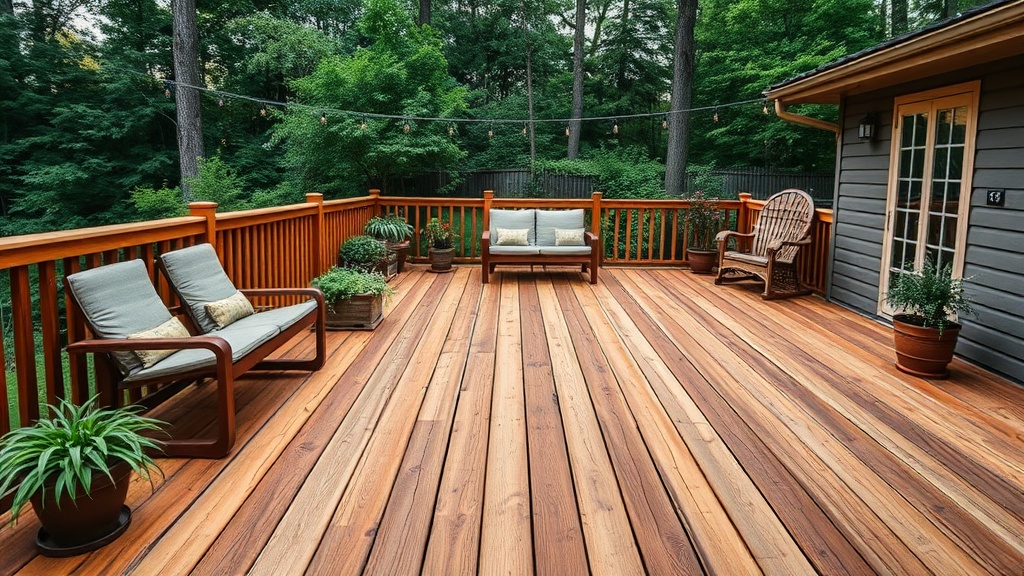
Building a Wood Deck That Lasts Decades

Stop Thinking Wood Decking Is Just About Looks
Most folks think building a deck is just a matter of picking a pretty color and nailing down some boards. They assume if the wood looks good on day one, it'll stay that way. That's a mistake. A deck isn't just a platform; it's a structural system that has to fight gravity, moisture, and the elements every single day. If you don't get the foundation and the drainage right, you aren't building a deck—you're building a future pile of rot. You have to think about how water moves and how the wood reacts to heat. If you ignore the structural mechanics, you'll be out there sanding and replacing boards in three years instead of twenty.
When I was teaching shop class, I always told my students that the finish is the least important part of any project. The strength is in the bones. The same goes for your backyard projects. You can buy the most expensive cedar or redwood, but if your joists are sitting in standing water or your fasteners are rusting out, that expensive wood won't save you. We're going to look at how to build a structure that actually holds up under pressure.
What Type of Wood Should I Use for a Deck?
This is the question I get asked more than any other. People see a beautiful piece of Ipe or Teak in a magazine and think they need it. While tropical hardwoods are great, they're expensive and a pain to work with because they're incredibly dense. For most standard residential builds, you've got three main paths: pressure-treated lumber, cedar, and composite.
Pressure-treated wood is the workhorse. It's treated with chemicals to resist rot and insects, making it the most budget-friendly option for your frame and even your decking. However, it can warp or twist as it dries out. Cedar is a step up—it looks better and has a natural resistance to decay, but it's much softer. You'll need to be careful with screw placement so you don't split the grain. Then there's composite, which is essentially a blend of wood fibers and plastic. It's low maintenance, but it's a different beast entirely. It doesn't rot, but it can get incredibly hot in the sun, which might be a problem if you have kids running around barefoot.
- Pressure-Treated Pine: Best for structural posts and joists.
- Western Red Cedar: Great for a natural look and moderate budget.
- Composite: Ideal for those who want to avoid staining every two years.
Before you buy, check the moisture content. If you're using wood, you want it to be as dry as possible before you start fastening it down. If you install wet wood, it's going to move, and your screw heads might even pop up above the surface as it shrinks. You can learn more about wood properties and moisture standards through the University of Florida IFAS resources, which are great for understanding how different environments affect wood.
How Deep Should My Footings Be?
If your footings are wrong, the whole deck is a liability. I've seen decks that start to tilt or bounce because the owner didn't account for the frost line. You can't just set a post on a flat rock or a thin layer of gravel. You need to dig deep enough to get below the frost line in your specific area. If you don't, the ground will heave during the winter, and your deck will be crooked by spring.
A standard footing should consist of a poured concrete pier. You want a wide base to distribute the weight. If you're building a large deck, don't rely on just a few posts; you need a consistent grid of support. I always recommend using a heavy-duty pier block or a poured concrete footing. This ensures the weight of the deck (and the people on it) is transferred safely into the earth. If you're unsure about your local building codes or frost depth, check your local municipal website—most counties have specific requirements for structural footings.
One thing people forget is the connection between the post and the footing. Never just bolt a wooden post directly to the top of a concrete pier. Use a metal post base. This creates a small gap that prevents the wood from soaking up water from the concrete. It's a simple $10 part that can save you a thousand dollars in rot repairs later. It's these little details that separate a hobbyist build from a professional-grade structure.
Why Is Proper Drainage So Important for a Deck?
Water is the enemy of everything outdoors. If water gets trapped between your deck boards and the joists underneath, you've created a breeding ground for mold and rot. This is why I'm a huge advocate for spacing. You might think tight-fitting boards look cleaner, but they're a disaster for longevity. You need a gap—usually about 1/8 to 1/4 of an inch—between every single board. This allows rainwater to drop through and, more importantly, allows the wood to breathe as it dries.
I also highly recommend using joist tape. It's a waterproof tape you stick to the top of your joists before you nail the decking down. It protects the most vulnerable part of the structure: the top edge of the wood where it meets the fasteners. If a screw pierces the board, the tape prevents water from seeping into the joist. It’s a small step that adds years to the life of your deck. You can find technical specifications for various building materials and fasteners at The ACCA, which often discusses building science and durability.
Also, consider the slope of your yard. If your deck is attached to the house, make sure your gutter system isn't dumping water directly onto the deck area. You don't want a constant stream of water hitting your wood. A well-designed deck should shed water away from the house foundation and avoid any areas where water naturally pools in your yard. If you're building near a patio, make sure the two structures don't trap water in the "V" where they meet.
When you're finishing up, don't forget the underside. If your deck is low to the ground, it lacks airflow. This can lead to a damp, dark environment that accelerates decay. If you're building a low-profile deck, you might need to install more ventilation or even a specialized drainage system to keep the air moving. A little bit of air circulation goes a long way in keeping your wood dry and healthy.
Remember, building a deck is a big undertaking. Don't rush the structural part just to get to the pretty part. A deck is a living, moving thing that reacts to the world around it. Treat it with respect, build it with a solid foundation, and it'll serve your family for a long time. If you're feeling nervous about the math, grab a level and a tape measure, and start by building a small model or a testing frame. It's better to make mistakes on a scrap piece of wood than on your actual house-attached structure.