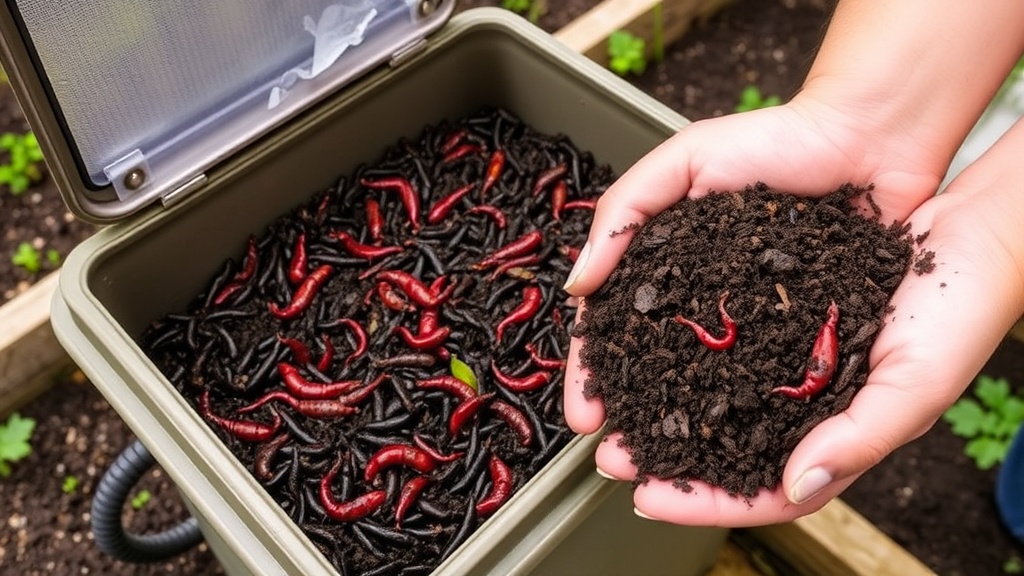
The Complete Guide to Composting with Worms (Vermicomposting)

The Complete Guide to Composting with Worms (Vermicomposting)
Alright, let’s talk about worms.
Not the kind you find after a rainstorm on the driveway. I’m talking about the kind that quietly turn kitchen scraps into some of the best garden fertilizer you’ll ever use.
It’s called vermicomposting, which is just a fancy word for composting with worms.
And here’s the thing most people don’t realize: you don’t need a farm or a big compost pile to do this. You can run a worm bin in your garage, shed, patio, or even under the kitchen sink if you really want to.
Once it’s set up, it’s one of the easiest ways to turn food scraps into rich soil for your garden.
Let me walk you through it.
What Is Vermicomposting?
Vermicomposting is the process of using worms to break down organic waste.
You feed them things like:
- Vegetable scraps
- Fruit peels
- Coffee grounds
- Eggshells
- Paper and cardboard
The worms eat the material and turn it into worm castings, which is basically worm manure.
Doesn’t sound glamorous, but gardeners love this stuff.
Worm castings are packed with nutrients and beneficial microbes that help plants grow stronger.
Think of it as supercharged compost.
Why Gardeners Love Worm Composting
A regular compost pile works great, but worm composting has a few advantages.
It Works in Small Spaces
You don’t need a big backyard.
A worm bin can be as small as a plastic storage tote.
That makes it perfect for small yards, patios, and even apartments.
It Breaks Down Scraps Faster
Worms process food scraps quickly.
A healthy worm bin can turn kitchen waste into compost in a few weeks instead of months.
The Compost Is Extremely Rich
Worm castings contain:
- Nitrogen
- Phosphorus
- Potassium
- Beneficial bacteria
Plants absolutely love it.
The Best Worms for Composting
Not all worms work well in compost bins.
The best species is called red wigglers.
They’re sometimes sold as:
- Red wigglers
- Compost worms
- Red composting worms
These worms thrive in shallow bins and eat organic waste quickly.
Earthworms you dig from the yard usually don’t do well in worm bins.
What You Need to Start a Worm Bin
The setup is simple.
Most worm compost systems include:
- A plastic bin or tote
- Bedding material
- Compost worms
- Kitchen scraps
That’s it.
You don’t need expensive equipment to start.
Step 1: Build or Buy a Worm Bin
You can buy fancy stacked worm bins, but honestly a simple plastic tote works great.
A common setup uses a 10–20 gallon storage bin.
Drill small holes in the lid and sides for airflow.
Some people also drill a few holes in the bottom so excess moisture can drain.
Set the bin on a tray or bricks to catch drips if needed.
Step 2: Add Bedding Material
Worms need bedding that holds moisture but still allows airflow.
Good bedding materials include:
- Shredded newspaper
- Shredded cardboard
- Coconut coir
- Dry leaves
Moisten the bedding so it feels like a wrung-out sponge.
Not dripping wet, just damp.
Fill the bin about halfway with bedding.
Step 3: Add the Worms
Now you introduce the workers.
A good starter amount is about 1 pound of worms, which is roughly 800–1000 worms.
Spread them gently over the bedding and let them burrow down.
They’ll settle in pretty quickly.
Step 4: Start Feeding the Worms
This is the fun part.
Worms love kitchen scraps like:
- Vegetable peels
- Fruit scraps
- Coffee grounds
- Tea bags
- Crushed eggshells
Chop larger scraps into smaller pieces so they break down faster.
Bury the food slightly in the bedding instead of leaving it on top.
That helps reduce odors and fruit flies.
What NOT to Put in a Worm Bin
Some things cause problems.
Avoid feeding worms:
- Meat
- Dairy products
- Oily foods
- Citrus in large amounts
- Spicy foods
These can create odors or make the bin environment unhealthy.
Stick to basic plant scraps and you’ll be fine.
Where to Keep a Worm Bin
Worms like moderate temperatures.
The sweet spot is roughly 55–77°F (13–25°C).
Good places for a worm bin include:
- Garages
- Basements
- Sheds
- Covered patios
If the bin gets too hot or too cold, the worms slow down.
How to Harvest Worm Castings
After a couple months, the bedding will start looking dark and crumbly.
That’s worm compost.
There are a few ways to harvest it, but here’s the easiest:
Move the finished compost to one side of the bin and add fresh bedding and food to the other side.
The worms will gradually migrate to the new food source.
Once they move over, you can remove the finished castings.
How to Use Worm Compost in the Garden
Worm castings are incredibly versatile.
You can use them to:
- Mix into potting soil
- Improve garden beds
- Feed vegetable plants
- Start seedlings
A small amount goes a long way.
Even a handful of castings can give plants a noticeable boost.
Common Beginner Mistakes
Almost everyone makes a couple mistakes when starting a worm bin.
Feeding Too Much Food
Start small.
If food scraps pile up faster than worms eat them, the bin can smell.
Making the Bin Too Wet
Too much moisture leads to odors.
If the bedding feels soggy, mix in dry paper or cardboard.
Forgetting Airflow
Worms need oxygen just like we do.
Air holes in the bin are important.
Why Vermicomposting Is Worth Trying
Worm composting is one of those backyard projects that seems a little weird at first.
Then it becomes weirdly satisfying.
Instead of throwing food scraps in the trash, you’re turning them into fertilizer for your garden.
It’s simple, low-cost, and surprisingly effective.
Plus, once the worms get to work, they pretty much run the whole system themselves.
You just feed them scraps and let nature handle the rest.