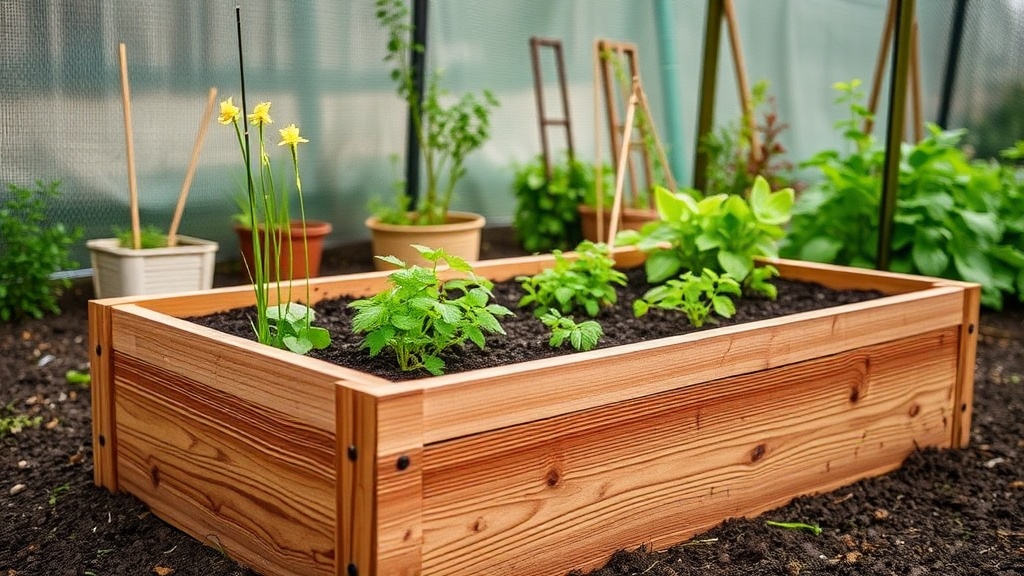
How to Build a Raised Garden Bed: A Complete Beginner's Guide

This guide walks through everything needed to build a sturdy raised garden bed from scratch—materials, tools, step-by-step construction, soil preparation, and planting tips. Whether the backyard soil is compacted clay, contaminated fill, or simply too hard on the knees, a raised bed solves the problem. You'll harvest vegetables sooner, manage weeds easier, and extend the growing season by weeks. No prior carpentry experience required.
What Materials Work Best for a Raised Garden Bed?
Cedar and redwood are the gold standards for outdoor projects—naturally rot-resistant, chemical-free, and handsome to boot. A 2-inch thick cedar board from a lumberyard like Home Depot or Lowe's will last 10-15 years without treatment. Pressure-treated pine costs half the price but carries a caveat: modern ACQ treatment is considered safe for vegetable gardens by the EPA, though some gardeners still prefer to line the interior with heavy-duty space fabric as a barrier.
Here's the thing—cedar isn't always available or affordable. Alternatives exist.
| Material | Cost (4x8 bed) | Lifespan | Best For |
|---|---|---|---|
| Cedar | $80-120 | 10-15 years | Permanent installations, aesthetics |
| Redwood | $100-150 | 15-20 years | High-end gardens, coastal climates |
| Pressure-treated pine | $40-60 | 7-10 years | Budget builds, annual flower beds |
| Composite decking | $150-200 | 25+ years | Zero maintenance, modern look |
| Cinder blocks | $50-75 | Indefinite | DIYers wanting flexibility |
Avoid railroad ties—they're soaked in creosote, a probable carcinogen that'll leach into vegetables. Old pressure-treated lumber (pre-2004) contains arsenic; steer clear unless you're growing flowers only.
Fasteners matter more than most beginners realize. Deck screws—specifically coated or stainless steel #10 x 3-inch exterior screws—hold better and resist corrosion. Standard drywall screws will rust out in two seasons. Grab a box of 50; you'll use them.
What Tools Are Needed to Build a Raised Bed?
The build requires basic hand tools plus a power drill. A circular saw makes cuts cleaner and faster, though a handsaw works if patience (and elbow grease) abounds.
Here's the complete list:
- Circular saw or miter saw—crosscuts boards to length
- Power drill with driver bits—drives screws without stripping
- Measuring tape—measure twice, cut once (still true after thirty years)
- Carpenter's square—keeps corners actually square
- Level—a 2-foot level suffices for beds under 8 feet long
- Hammer—sometimes boards need persuasion
- Safety glasses—sawdust in the eye ruins Saturday
- Work gloves—splinters are optional
Optional but worthwhile: a speed square (handy for marking cut lines) and a clamp or two (holds boards together while fastening). Renting tools isn't necessary—this isn't fine furniture, and rough cuts hide in garden soil.
How Deep Should a Raised Garden Bed Be?
Six to twelve inches handles most vegetables adequately; eighteen inches or deeper supports root crops like carrots and parsnips, plus provides better drainage in heavy clay soils. Tomatoes, peppers, and lettuce thrive in 8-inch beds. Potatoes and deep-rooted perennials (asparagus, berries) want the full foot-and-a-half.
Width matters too. Four feet is the magic number—reach the center from either side without stepping into the bed. (Compaction kills soil structure.) Length is flexible; 8 feet uses lumber efficiently with minimal waste. That said, don't build a 40-foot monster. Maintenance becomes a chore, and accessing the middle requires a plank walk. Stick to manageable 4x8 or 4x6 sections.
Height becomes critical for accessibility. A standard 6-inch bed means kneeling or bending. For gardeners with back issues—or those who simply prefer standing—a 24-30 inch tall bed brings plants to waist level. The catch? Taller beds require exponentially more soil. A 4x8 bed at 6 inches needs 16 cubic feet of soil; raise it to 24 inches and you're buying 64 cubic feet. That's expensive. One workaround: fill the bottom third with logs, branches, and leaves—a technique called hugelkultur that decomposes slowly, feeding soil biology while reducing fill costs.
Step-by-Step Construction
Building the bed takes an afternoon—less once you've done a few.
Step 1: Site Selection and Preparation
Vegetables demand sunlight—six hours minimum, eight hours ideal. Observe the yard through a day. Morning sun beats afternoon sun for leafy greens; tomatoes and peppers won't complain about blazing afternoon heat.
Once the spot's chosen, clear grass and weeds. Don't till—tilling brings weed seeds to the surface and disrupts soil layers. Instead, lay cardboard directly on the grass, overlapping edges by 6 inches. This smothers weeds without herbicides. The cardboard decomposes within a season, feeding earthworms and improving soil structure beneath the bed.
Step 2: Cut the Lumber
For a standard 4x8 bed, cut two 8-foot boards in half—giving four 4-foot pieces. You'll have two 8-foot lengths and four 4-foot lengths. Wait—that's wrong. You need two 8-foot side pieces and two 4-foot end pieces. Double-check the math: a rectangular box has two long sides and two short sides.
If building higher than one board's width (5.5 inches for a 1x6), stack additional courses. Two courses yield 11 inches; three yield 16.5 inches. Cut all boards before assembly—consistency matters.
Step 3: Assemble the Box
Lay the first course on the cardboard, arranging boards in a rectangle. Check corners with the carpenter's square—90 degrees prevents the wobbly rhombus look. Pre-drill holes to prevent splitting (especially important with cedar, which cracks easily near edges).
Fasten corners with two screws per joint. Drive screws at slight angles for better bite. Attach the second course directly atop the first, staggering joints—don't line up seams at corners. Offsetting creates strength. Three screws per corner secures things nicely.
Corner posts add rigidity. A 4x4 cedar post cut to bed height, screwed inside each corner, prevents the box from bowing outward when filled with soil. Worth the extra $20.
Step 4: Level and Position
Rarely is backyard ground perfectly flat. Use the level and shovel to adjust, digging down high corners or adding soil beneath low ones. A level bed looks professional and prevents water from pooling on one side. Patience here pays dividends—fighting a tilted bed all season isn't fun.
Step 5: Fill with Soil
Don't use native dirt—it defeats the purpose. Raised beds demand quality soil mixes. The classic formula: 60% topsoil, 30% compost, 10% drainage material (coarse sand, perlite, or vermiculite). This blend drains well, resists compaction, and feeds plants.
For a 4x8 bed at 12 inches deep, that's 32 cubic feet of material—roughly 20 cubic feet of topsoil and 10 cubic feet of compost. Bagged soil works for small beds (look for Miracle-Gro Garden Soil or similar quality brands), but bulk delivery from a local space supplier costs half as much for larger projects. Many suppliers sell "raised bed mix" ready to go.
Worth noting: fill the bed to the brim. Soil settles—what looks full today will be 2 inches lower in a month. Top off with compost before planting.
What Should You Plant First?
Start easy. Leafy greens—lettuce, spinach, kale—mature in 30-50 days and tolerate beginner mistakes. Radishes pop up in 3 weeks, delivering quick wins. Bush beans and patio tomatoes (varieties like 'Better Bush' or 'Patio Princess') produce reliably without the staking nightmares of indeterminate vines.
Spacing matters more in raised beds than in-ground gardens. Intensive planting—using every square foot—works because the soil quality is uniform and never compacted. Follow square foot gardening guidelines: one tomato per 2 square feet, nine bush beans per square foot, sixteen carrots per square foot.
Companion planting helps. Basil beside tomatoes improves flavor (or so the old wisdom goes—studies are mixed, but they certainly don't hurt). Marigolds deter some pests. Tall plants go north so they don't shade shorter neighbors.
Maintenance Tips for Long-Term Success
Watering raised beds differs from in-ground gardens. The soil drains faster—good for roots, demanding for hydration. Drip irrigation or soaker hoses save time and water; hand-watering works fine for small beds. Mulch heavily with straw or shredded leaves to retain moisture and suppress weeds.
Every spring, top-dress with an inch of compost. No need to dig it in—worms and rain handle distribution. Rotate crops annually; tomatoes shouldn't occupy the same spot two years running (disease builds up).
Watch for bowing boards after the first season. Soil is heavy—saturated soil weighs 100 pounds per cubic foot. Reinforce corners if needed, and don't exceed 4-foot widths. That 6-foot-wide bed seemed like a good idea in February. By June, you'll be climbing into it.
Building a raised garden bed isn't complicated carpentry—it's straightforward construction that yields vegetables for a decade. Start with cedar, keep it four feet wide, fill it with quality soil, and plant something you'll actually eat. The tomatoes taste better when you grew them yourself. That's not sentiment talking—it's sugar content from vine-ripening versus truck-ripening. Get building.
Steps
- 1
Choose the right location and gather materials including cedar lumber, screws, and hardware cloth
- 2
Cut lumber to size and assemble the frame using corrosion-resistant screws and corner brackets
- 3
Install hardware cloth at the bottom to prevent pests, then fill with quality soil mix