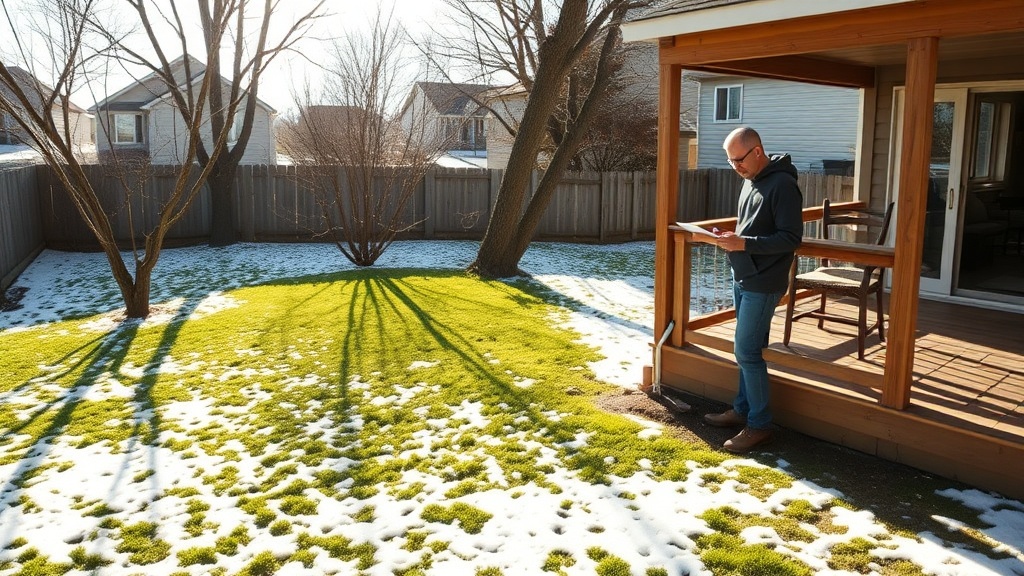
Late February Backyard Prep: Your Priority Checklist (Do These First)

Alright, Here's the Deal
It's late February, and I get it—you're itching to get outside and start building stuff. Spring is three weeks away, but your backyard probably looks rough right now. Winter did damage. Leaves are everywhere. Your deck might be sketchy.
The question isn't "what should I do?" It's "what should I do FIRST?" Because if you tackle the wrong things first, you'll waste a weekend.
Here's what actually matters this week, in order of importance.
Do These This Weekend (Before Anything Else)
1. Walk Your Deck or Patio and Check for Damage
Why first: If your deck is unsafe, you can't use it. And you might need to hire someone, which takes time.
What to look for:
- Soft spots (press hard with your boot—rotted wood feels spongy)
- Loose or missing boards
- Wobbly railings
- Nails popping up
- Cracks wider than 1/4 inch in the surface
Time: 20 minutes
Cost: Free (just your eyes)
If you find problems: Don't ignore it. A soft board is a structural issue. You can DIY replacing a board or two, but if the frame is compromised, call a contractor. Not worth the risk with kids on it.
2. Clear Winter Debris from Gutters, Downspouts, and Drainage Areas
Why: Water damage is expensive. Spring rain is coming, and if water pools in your yard or backs up near your foundation, you've got a problem.
What to do:
- Gutters and downspouts—clear leaves and debris
- Check that water flows AWAY from your house (not toward it)
- Clear any low spots where water might pool
- If you have a sump pump, make sure it's working
Time: 45 minutes to an hour
Cost: Free (unless you need a gutter repair)
Pro tip: If you've got gutters, this is a twice-yearly job—once in late fall (before leaves drop) and once in late February (after they've all landed). It's not fun, but it saves thousands in water damage.
3. Check Your Grill (If You Have One)
Why: Grilling season is about to start, and you don't want to discover your grill is rusted or broken when you're ready to cook.
What to check:
- Grates—any rust? (Light surface rust is fine, deep rust means replace them)
- Propane tank (if applicable)—full? Any leaks? (Smell for rotten egg smell)
- Burners—do they light? Ignition working?
- Thermometer—readable?
- Drip pan—clean it out
Time: 30 minutes
Cost: $0-50 (might need new grates or propane)
Don't skip this: A grill with bad burners is useless. Test it before grilling season gets here.
Do These Next Week (Still Before Building Season)
4. Walk Your Yard and Mark Problem Areas
Why: You need to know what you're working with before you plan projects.
What to look for:
- Low spots that hold water (drainage issues)
- Dead patches in the lawn
- Bare spots where nothing grows
- Erosion (soil washing away)
- Cracked concrete or pavers
- Fence damage
Time: 30 minutes
Cost: Free
Bring a notebook: Write down what you see. This helps you plan what to tackle first. (Spoiler: drainage issues come before planting.)
5. Prune Dead Branches from Trees and Shrubs
Why: Dead wood looks bad and can be a hazard. Plus, you can see what's actually alive before spring growth starts.
What to do:
- Look for branches that are completely brown and brittle
- Prune them back to healthy wood
- Don't do major pruning yet—wait until trees fully leaf out
- This is just cleanup, not reshaping
Time: 1-2 hours (depends on how many trees)
Cost: Free (you've got pruning shears)
Don't hack at it: If a tree looks seriously damaged, call an arborist. Don't guess.
6. Plan Your Spring Projects (The Fun Part)
Why: You can't build smart if you don't know what you're building.
What to do:
- Sketch your yard (rough—doesn't need to be perfect)
- Mark sun patterns (which areas get full sun, shade, partial?)
- Note problem areas you found (wet spots, dead zones)
- List what you WANT (fire pit, garden beds, pergola, better patio?)
- Prioritize (what's most important, what can wait?)
Time: 1 hour with coffee
Cost: Free
This matters: You can't plant a garden in a swampy spot. You can't build a pergola in full shade if you want to sit under it. Think it through now, save yourself headaches later.
What You Can SKIP Until March
Don't do these yet. Seriously.
- Planting anything in the ground: Last frost date is still weeks away. You'll kill it.
- Major pruning: Wait until trees are fully leafed out. You can't see what's alive yet.
- Staining or painting: It's still too cold and damp. Wait until temps are consistently above 50°F.
- Laying new sod: Soil is still cold. Seed won't germinate. Wait 3-4 weeks.
- Starting seeds indoors yet: Unless you're in the far south, it's still early. Check your last frost date first.
Your Priority This Week: The 2-Hour Checklist
If you've only got one weekend, do this in order:
- Check your deck: 20 minutes (safety first)
- Clear gutters: 45 minutes (water damage prevention)
- Test your grill: 30 minutes (spring cooking readiness)
That's 90 minutes. You're done. Your backyard is ready for the next phase.
Everything else can wait until next week.
What's Next?
Once you've knocked these out, you'll be ready to:
- Plan your spring projects (garden beds, fire pit, pergola, whatever)
- Order materials
- Actually build stuff when the weather cooperates
Late February is the planning and prep phase. You're not building yet—you're getting ready to build. Do it right this week, and you'll have a smooth spring.
Questions? Drop them below. I'll help you figure out what's actually urgent in your yard.