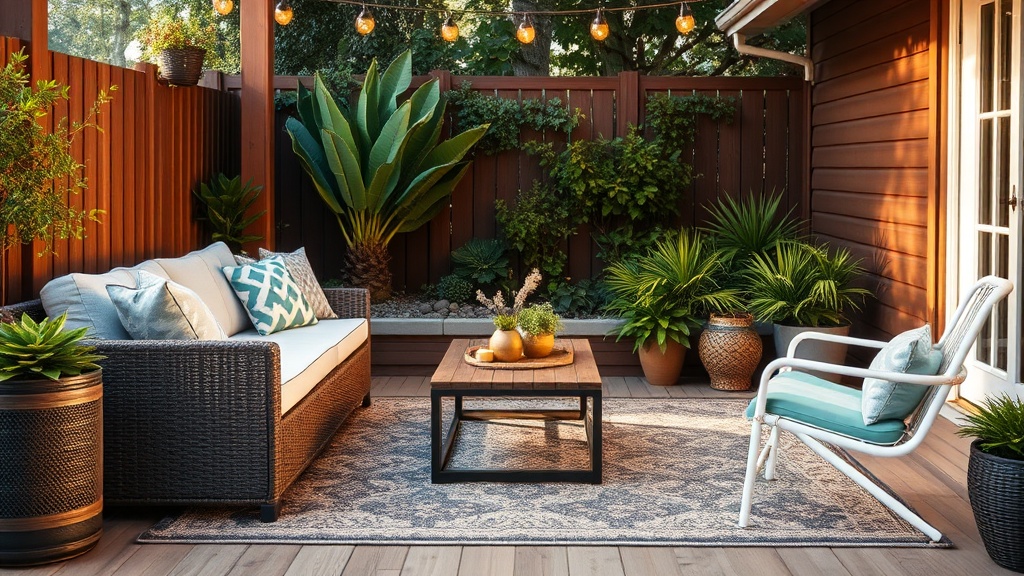
Selecting the Right Outdoor Rug for Your Patio Space

Most people don't realize that a standard outdoor rug can collect up to five pounds of debris and allergens in just a single season if it isn't properly maintained. Choosing the right rug for your patio isn't just about picking a pattern you like; it's about material science, drainage, and UV resistance. This guide breaks down how to select a rug that survives the weather, stays put during a storm, and actually looks good under your patio furniture.
What Material Should I Use for an Outdoor Rug?
You should primarily look for synthetic fibers like polypropylene or polyester because they are engineered to withstand moisture and sun exposure without rotting or fading. Natural fibers like jute or sisal might look great in a catalog, but they'll fall apart if they get soaked by a heavy rainstorm or a stray garden hose.
Polypropylene is the industry standard for a reason. It’s a plastic-based fiber that resists mold, mildew, and most stains. If you're building a high-end outdoor kitchen or a large deck, you'll likely see this material used in almost every high-quality product on the market. It’s tough, easy to clean, and doesn't absorb water like a sponge.
Here is a quick breakdown of common outdoor materials:
| Material | Best Use Case | Pros | Cons |
|---|---|---|---|
| Polypropylene | High-traffic patios | Highly durable, UV resistant | Can feel a bit "plastic-y" |
| Polyester | Decorative areas | Soft texture, vibrant colors | Slower drying time |
| PET (Recycled Plastic) | Eco-friendly builds | Sustainable, very durable | Higher price point |
| Jute (Natural) | Covered porches only | Beautiful, organic look | Will rot if wet |
If you want something that feels a bit more premium, look for rugs made from recycled PET (polyethylene terephthalate). These are often used in high-end outdoor furniture sets. They provide a softer feel underfoot than standard polypropylene but maintain the durability needed for exterior use. Polypropylene is the heavy hitter here, though.
How Do I Choose the Right Size for My Patio Furniture?
The ideal size for an outdoor rug depends on whether you want the rug to sit under the entire furniture set or just the front legs of the chairs. A rug that is too small makes the space look disjointed and can actually make your patio feel smaller than it is.
I always tell my clients to measure twice and buy once. If you're setting up a dining table, you want the rug to be large enough so that when people pull their chairs out to sit down, the chair legs stay on the rug. There's nothing more annoying than having a chair leg catch on the edge of a rug while you're trying to sit down (it's a real tripping hazard, too).
For a lounge area with a sofa and a coffee table, you have two main options:
- The Full Set Method: The rug sits under the entire sofa and coffee table. This creates a "room" feeling and anchors the space.
- The Front-Leg Method: The rug goes under the front legs of the sofa and the coffee table. This is a great way to save money on larger, more expensive rugs.
Don't forget to account for your perimeter. Leave at least 12 to 18 inches of bare patio surface around the edge of the rug. This prevents the space from looking cramped and allows for better water runoff. If you've built a custom stone patio, you'll want that stone visible to frame the area properly.
Will an Outdoor Rug Damage My Deck or Patio?
An outdoor rug can damage your surface if it traps moisture underneath it, so you must use a rug pad or ensure the material is highly breathable. If you have a wooden deck, moisture trapped under a rug can lead to wood rot or mold growth over time.
This is a big deal for anyone with a wooden structure. I've seen plenty of decks ruined because someone threw a heavy rug down and never moved it. The wood can't "breathe," and the trapped humidity is a recipe for disaster. To prevent this, I recommend using a specialized outdoor rug pad that allows for airflow. These are usually made of a thin, non-slip material that keeps the rug in place without creating a vacuum seal against the wood.
If you're working on a concrete or stone patio, the risk is lower, but you still need to watch out for staining. Dirt and organic matter can get trapped between the rug and the stone. I suggest lifting the rug once a month to spray it down with a hose and let the surface underneath dry out. It's a simple way to keep your patio in top shape. If you're also working on your landscaping, you might want to boost your outdoor lighting to ensure you can actually see the rug and your patio edges at night.
A quick tip from my shop days: if you're worried about the rug sliding on a smooth surface, don't just use any old rug pad. Look for one specifically rated for outdoor use. They are designed to handle temperature swings and won't become a sticky mess when the sun hits them.
How Do I Clean and Maintain an Outdoor Rug?
Regularly vacuuming and hosing off your rug is the best way to extend its lifespan and keep it looking new. Most high-quality outdoor rugs are designed to be extremely low-maintenance, but you can't just ignore them for three years and expect them to look good.
Here is my standard maintenance routine for clients:
- Weekly: Use a stiff-bristled broom or a shop vacuum to remove loose dirt and leaves.
- Monthly: Hose the rug down with water to wash away fine grit that settles into the fibers.
- Seasonally: If you see a stubborn stain, use a mild soap and water solution. Avoid harsh chemicals that can degrade the plastic fibers.
- End of Season: Store your rug in a dry place or a plastic bin if you live in a climate with heavy snow and ice.
If you have a heavy-duty rug, you can even use a pressure washer on a low setting, but be extremely careful. If the pressure is too high, you'll actually strip the fibers right out of the weave. I've seen people turn a beautiful rug into a pile of lint by being too aggressive with a power washer.
When it comes to stains, don't panic. Most outdoor rugs are designed to be "washable." If you spilled some BBQ sauce or wine, blot it up immediately. Don't rub it—rubbing pushes the liquid deeper into the weave. Just blot, blot, blot.
One last thing—pay attention to the sun. Even "UV resistant" rugs will eventually fade if they sit in direct, blistering sunlight for twelve hours a day. If you have a section of your patio that gets way more sun than the rest, you might want to choose a darker or more saturated color to hide the inevitable fading. Light-colored rugs show dirt much faster, which is something to keep in mind if you have kids or pets running around the yard.