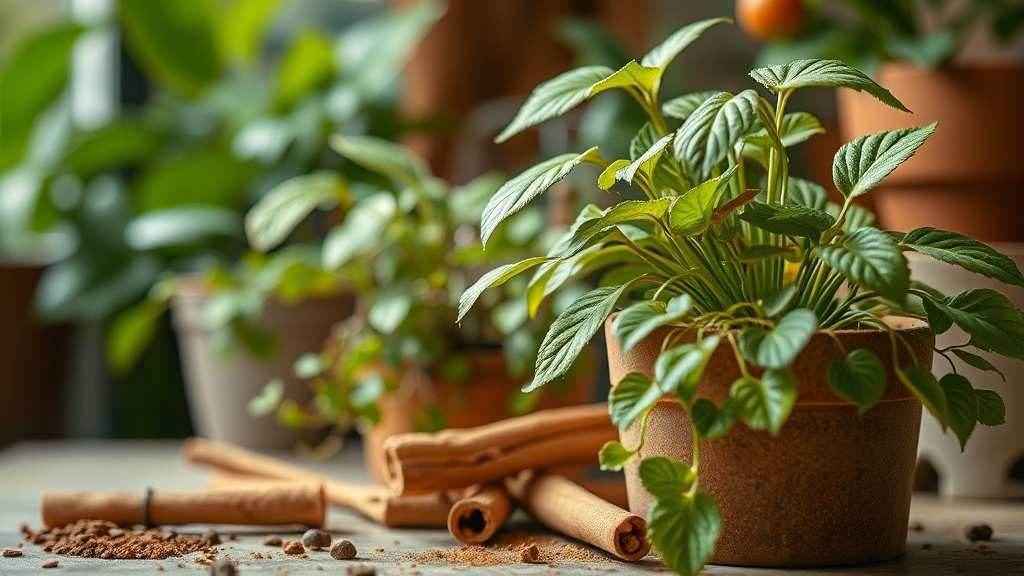
The Cinnamon Trick to Protect Your Potted Plants from Fungus

Quick Tip
Sprinkle a light dusting of ground cinnamon on damp soil to act as a natural fungicide.
Stop Fungus in Its Tracks with a Kitchen Staple
You are going to learn how to use ground cinnamon as a natural fungicide to protect your potted plants from mold, mildew, and damping-off disease. While many gardeners reach for expensive chemical sprays when they see white fuzz on soil or stems, a simple shake of the spice rack can solve many common fungal issues in your containers.
Why Cinnamon Works
Cinnamon contains cinnamaldehyde, a compound that possesses natural antifungal properties. In a container garden, moisture often gets trapped in the soil, creating a breeding ground for fungi like Pythium or Rhizoctonia. These pathogens cause "damping-off," where young seedlings suddenly collapse at the base of the stem. By applying cinnamon, you are creating a protective barrier that inhibits the growth of these microscopic spores without introducing harsh synthetic chemicals into your backyard ecosystem.
How to Apply the Treatment
Depending on the severity of the issue, use one of these three methods:
- For Seedling Protection: If you are starting seeds in small peat pots or plastic starter trays, lightly dust the surface of the soil with ground cinnamon immediately after planting. This prevents fungal outbreaks during the critical germination phase.
- For Surface Mold: If you see a white, fuzzy layer forming on the top inch of your potting mix in a terracotta or ceramic pot, sprinkle a thin, even layer of cinnamon over the affected area. Do not overdo it; a light dusting is sufficient to cover the visible mold.
- For Stem Wounds: If you are pruning a woody plant or a large shrub in a container, dab a tiny amount of cinnamon directly onto any fresh cuts. This acts as a "liquid bandage" to prevent pathogens from entering the plant through the wound.
Pro-Tips for Success
For the best results, ensure you are using standard, plain ground cinnamon—not the "cinnamon sugar" variety used for baking, which contains additives that can harm your plants. If you are dealing with heavy moisture issues, you might also consider incorporating organic matter like coffee grounds to help manage soil structure, though cinnamon is your primary defense against active fungal growth.
Expert Note: Cinnamon is a preventative and a topical treatment. It is not a systemic cure. If your plant is already dying from a deep-rooted fungal infection, you may need to repot the plant in fresh, sterile potting soil and treat the drainage holes.
Keep this trick in your back pocket for the next time you notice a white film on your patio containers. It is cheap, effective, and completely safe for your backyard.