Which Charcoal Grill Should You Buy for a Real Suburban Backyard in 2026?

Which Charcoal Grill Should You Buy for a Real Suburban Backyard in 2026?
Alright, let’s do this without fluff: if you live in a suburban yard, your charcoal grill choice should match your use pattern, not your Pinterest fantasy.
I get asked this every spring and every fall. Most people start with one of three assumptions:
- “Bigger is always better.”
- “Kamado means perfect grilling.”
- “The cheapest option is always the best starter choice.”
None of those are true for every yard.
The truth: the right charcoal grill is the one you’ll use regularly without fighting it.
My 60-second decision framework
Use this quick rule before you buy:
- You grill for 2–4 people, mostly once or twice a week = small footprint + low maintenance wins.
- You grill for friends and family on weekends = mid-size with steady heat and easier cleanup matters more than bells and whistles.
- You want smoke, sear, and a little low-and-slow = you need a more insulated design or better airflow control.
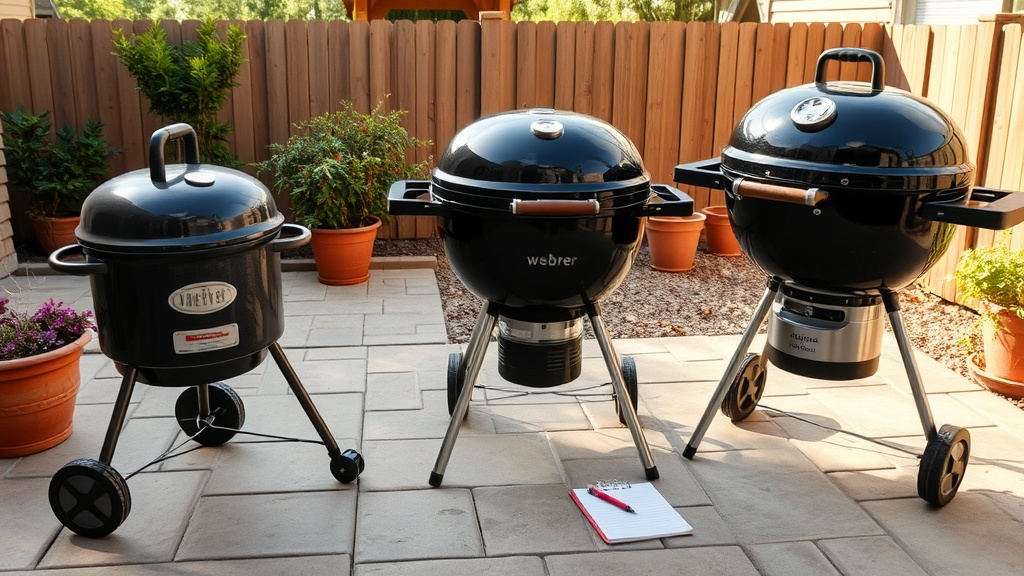
I separate grills into three practical buckets:
- Pocket/portable (small grills you can move around).
- Family mid-size (for regular backyard hosting).
- Kamado-style compact (good heat retention, more learning curve).
What I actually recommend in 2026
1) Char-Griller AKORN Jr. (small kamado) — best all-around for small yards with ambitions
If your budget can handle it and you like cooking better than babysitting a grill, this is a strong option. It gives you real heat control for its size and does charcoal cooking and low-and-slow pretty well.
I’m not impressed by the people who dismiss this model because it’s compact. A lot of families think they need a giant grill before it’s worth cooking on. That’s not true.
Why I like it
- Solid temperature control once you learn the vents.
- Cast iron grates and decent heat retention at a compact size.
- Works on medium- and small-scale cooks (steaks, burgers, chicken, small racks of ribs).
What to watch
- It takes a little practice to dial in airflow.
- You may need accessories if you want true low-and-slow comfort.
- You want stable ground where it won’t be moved by kids, pets, or wind.
As of latest web checks this model shows around the $169 area in some stores, but prices move a lot by region and stock, so check current local pricing before buying.
2) Weber Smokey Joe — best for small patios and easy habit building
This is still one of the smartest starter charcoals for people who want to learn without making life harder than it already is.
If you’re learning how to light cleanly, manage ash, and cook simple meals, this class of grill is the easiest path to confidence.
Why I like it
- Very forgiving for learning.
- Easy to move, easy to store.
- Fast startup and straightforward cleanup.
What to watch
- Not a big cook chamber.
- Not ideal for large Sunday brunches.
- You sacrifice some heat stability compared with bigger, heavier builds.
If you’re in a townhouse with a tiny patio, this is often the smartest first buy. You’ll cook more because it’s less hassle.
3) Weber Performer Deluxe 22 in. — best when family cook volume matters
If your Saturday plan is real people, food, and repeated use, this is the one that starts to feel like “regular backyard grill life.”
I generally move people here when they are done with tiny cookers and ready for true weekend hosting.
Why I like it
- More even surface area for feeding multiple plates at once.
- One-size-fits-most for weekend use.
- Better for families that cook weekly.
What to watch
- It is a bigger time commitment than mini grills.
- You’ll need routine ash cleanup habits or it’ll get annoying.
- Price and size both go up fast compared with portable options.
I found listings across retailers in the several-hundred-dollar zone, but again: stock changes by week and by region, so treat that as a moving target.
How I’d pick one for common backyard situations
You mostly grill 1–2 people
Choose the Akorn Jr. if you want a grill that can do both high-heat and low-and-slow.
Choose the Smokey Joe if your goal is simple, frequent use and low friction.
You host small gatherings (4–6 people)
Choose the Performer Deluxe first, Akorn Jr. second (if you’re ready to learn airflow management).
You want to experiment with BBQ techniques
Get the Akorn Jr. and a digital thermometer before upgrading to anything bigger. It’s better to learn on a smaller heat-retentive grill than to buy a giant setup and never use it right.
The mistake I see all the time
People buy the biggest grill and then use it as if it were a mini smoker.
A charcoal grill isn’t “set it and forget it” for beginners. It wants attention. If you buy too big too soon, you feel tied to the grill for too long and quit using it.
You don’t need a huge piece of steel to make good food. You need a setup that fits your routine.
Buying plan: do this before checkout
Use this checklist and skip impulse buys:
- Measure your actual cooking rhythm:
- How many people?
- How often per month?
- Where will ash go after each cook?
- Confirm local weather and storage:
- Can you store it covered?
- Is wind a big problem on your deck/patio?
- Confirm budget with local pricing:
- Store base price
- Shipping or curbside fees
- Gas conversion or accessory add-ons
- Confirm handling:
- Can you lift/park it safely?
- Is the patio uneven?
- Do kids or dogs require a stable, high-walled design?
If you’re not sure, buy the smaller model for 90 days and move up only after you know what you actually use.
Bottom line: what I’d buy myself
If someone walked up today and asked “which one?” and gave me only one option budget, I’d say:
- Need beginner confidence + portability: Weber Smokey Joe.
- Need versatility in a small footprint: Char-Griller Akorn Jr.
- Need consistent family weekend cooking: Weber Performer Deluxe 22 in.
You don’t need to chase prestige this season. You need something that makes you cook more often.
That’s the win in a real backyard.
And if you’re confused between two, use this: pick the grill whose daily use is easiest, not the one with the fanciest model name.