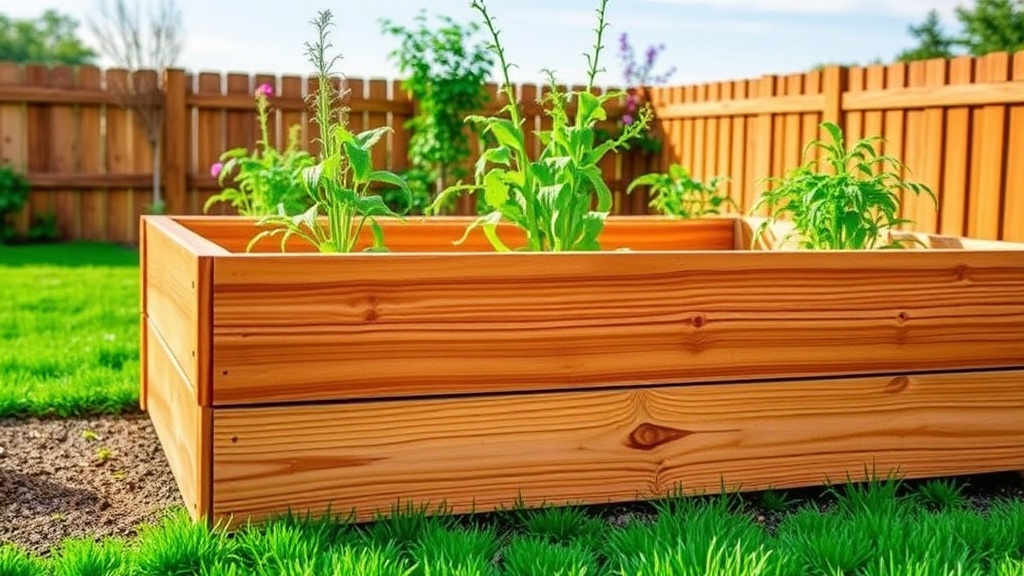
Build a Simple Raised Bed Garden with Cedar

Most people believe that building a raised garden bed requires expensive specialized tools or a degree in engineering. They think you need a heavy-duty excavator or a professional-grade carpenter's kit to get started. That is a mistake. A functional, durable raised bed can be built using nothing more than a standard circular saw, a drill, and a few basic hand tools. This guide provides a step-by-step blueprint for constructing a 4x8-foot cedar raised bed that will last for a decade or more. By the end of this post, you will have a structural plan that prevents soil erosion, manages drainage, and provides the ideal growing environment for your vegetables.
Why Cedar is the Right Choice
When you are selecting lumber for garden beds, you have three main options: pressure-treated pine, untreated pine, and cedar. While pressure-treated wood is cheaper, modern treatments are generally safe for vegetables, but the wood itself tends to degrade faster in high-moisture environments. Untreated pine is the least expensive, but it will rot within two or three seasons if it stays in constant contact with wet soil. Western Red Cedar is the gold standard for DIY gardeners. It contains natural oils and tannins that act as a built-in preservative against rot, decay, and insects. It is much more durable than pine and offers a much cleaner aesthetic for your backyard layout.
Using cedar also means you won't have to worry about the wood splintering or warping as drastically as cheaper softwoods. If you are planning to build a larger landscape feature, such as a perfect backyard gathering spot, you want materials that can withstand the elements without constant maintenance. Cedar fits that bill perfectly.
The Tool and Material List
Before you head to the local lumber yard, ensure you have the following items. I recommend checking your local Home Depot or Lowe's for "Rough Sawn" cedar if you want a more rustic look, or "S4S" (Surfaced on 4 Sides) if you want a smoother finish.
Lumber and Hardware
- (3) 2x12 Cedar Boards (8 feet long): These will form the long sides of your bed.
- (2) 2x12 Cedar Boards (4 feet long): These will form the short ends. (You can buy 8-foot boards and cut them in half yourself).
- (1) 4x4 Cedar Post (6 feet long): This will be cut into four 12-inch segments to serve as your corner supports.
- (1) Box of 3-inch Exterior-Grade Wood Screws: Look for "Deck Screws" specifically; they are coated to prevent rust.
- (1) Roll of Heavy-Duty Landscape Fabric: This prevents soil from leaching out the bottom while maintaining drainage.
Tools Needed
- Circular Saw: To cut your boards to size.
- Power Drill/Driver: To drive the screws.
- Speed Square: To ensure your corners are 90 degrees.
- Tape Measure: Accuracy is key to preventing gaps in your corners.
- Level: To ensure your bed is even with the ground.
- Drill Bit: A 1/8-inch bit for pre-drilling holes (this prevents the cedar from splitting).
Step by-Step Construction Guide
Step 1: Measuring and Cutting the Lumber
Start by laying out your boards on a flat surface, like a garage floor or a driveway. You need two 8-foot boards for the sides and two 4-foot boards for the ends. Use your speed square to draw a perfectly straight line across the width of the board before cutting. If your line is crooked, your garden bed will be crooked, and your soil will eventually leak out of the corners. Use the circular saw to cut the two 4-foot end pieces. Next, take your 4x4 cedar post and cut it into four equal 12-inch sections. These posts will be the internal skeleton of your bed, providing the strength needed to hold the weight of the soil.
Step 2: Pre-Drilling for Structural Integrity
One of the biggest mistakes I see in DIY projects is "driving" a screw directly into the end grain of a board without a pilot hole. This causes the wood to split instantly, ruining your lumber. Before you join any pieces together, use your power drill and a 1/8-inch bit to drill a pilot hole through the 2x12 board and into the 4x4 corner post. Do this for every single screw location. This ensures the wood stays intact and the connection remains tight under the pressure of heavy, wet soil.
Step 3: Assembling the Frame
Lay your 8-foot side boards and your 4-foot end boards on the ground to form a rectangle. Place one 12-inch 4x4 post in each corner. The 4x4 post should be positioned in the interior corner of the frame. This way, the long boards and the short boards both butt up against the post.
Take your first 8-foot board and align it with the 4x4 post. Drive three 3-inch exterior screws through the board and into the post. Repeat this for the other side. Now, take your 4-foot end board and attach it to the remaining two 4x4 posts. Once you have the basic rectangle, stand it up. If the frame is wobbly, check your measurements. Use your level to ensure the frame is sitting flat on the ground. If you are building on a slope, you may need to dig out a small amount of dirt under one side to level it.
Step 4: Lining the Bed
Before you add any soil, you must line the interior of the bed. Use your heavy-duty landscape fabric. Lay the fabric inside the wooden frame, ensuring it covers the bottom and runs up the sides about 6 inches. Secure the fabric to the inside of the cedar walls using a staple gun or by tucking it firmly into the corners. This fabric acts as a filter; it allows water to drain out through the bottom while keeping your expensive organic soil from washing away during heavy rain or irrigation. This is especially important if you are using a drip irrigation system to ensure morning watering doesn't lead to soil erosion.
Filling Your Raised Bed
Now that the structure is built, you need to fill it with a high-quality growing medium. Do not simply fill it with dirt from your backyard. Backyard soil is often too compacted and lacks the nutrient density required for intensive vegetable gardening. Instead, use a "Raised Bed Mix," which is typically a blend of compost, peat moss or coconut coir, and perlite or vermiculite. This blend provides the aeration and drainage that plants need to thrive.
A common technique is the "Hugelkultur" method for larger beds, where you layer decaying wood or branches at the very bottom. However, for a 12-inch deep cedar bed, a standard high-quality organic soil mix is more efficient. Fill the bed until the soil level is about 2 inches below the top edge of the wood. This prevents soil and mulch from spilling over the sides when you water your plants.
Maintenance and Longevity Tips
To keep your cedar bed looking good and functioning well, follow these three maintenance rules:
- Monitor Moisture: Raised beds dry out faster than traditional in-ground gardens. Depending on your climate, you may need to water more frequently. If you are growing succulents or heavy feeders, keep a close eye on the soil moisture levels.
- Check for Levelness: After a particularly heavy rain or a hard freeze, check to see if the bed has shifted. If it has, you may need to add a bit more soil to level it out.
- Avoid Chemical Treatments: Never use a chemical wood sealant inside the bed. Even though cedar is naturally rot-resistant, if you decide to stain the outside for aesthetics, ensure the product is non-toxic and food-safe.
Building a raised bed is a fundamental skill for any gardener. It gives you total control over your soil quality, drainage, and plant placement. By using cedar and following these structural guidelines, you aren't just building a temporary container; you are building a long-term asset for your backyard ecosystem.
Steps
- 1
Gather your cedar boards and hardware
- 2
Cut the boards to your desired length
- 3
Assemble the frame using exterior screws
- 4
Line the bottom with hardware cloth to deter pests
- 5
Fill with high-quality garden soil and compost