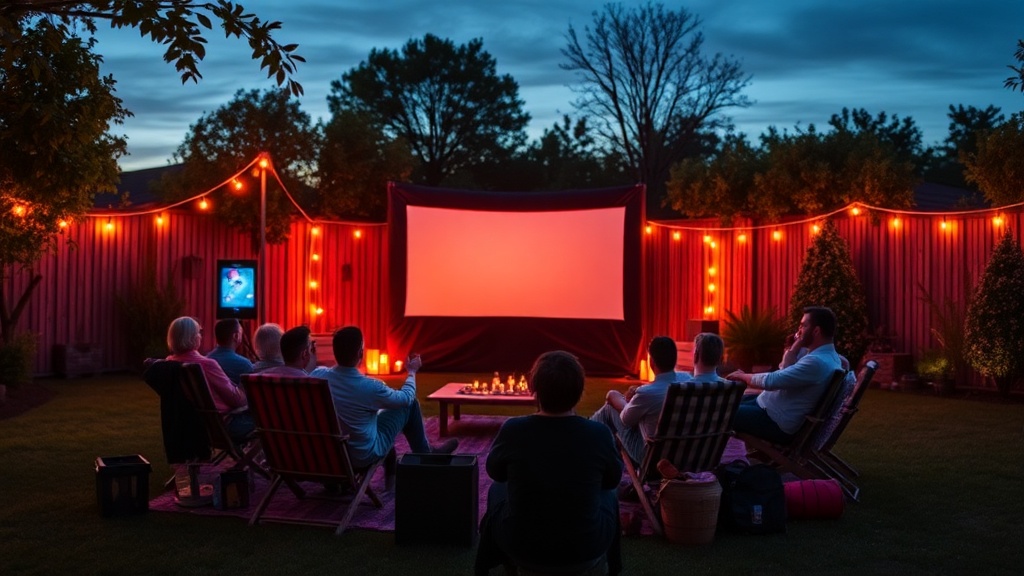
How to Set Up a Backyard Movie Night

The Biggest Mistake People Make With Outdoor Movie Nights
Most people think that setting up a backyard movie night requires a massive, expensive permanent installation or a professional-grade theater setup. They assume that if they don't have a fixed projector mount on the side of their house or a massive dedicated screen, the experience will be a disappointment. This is a misconception. You don't need a permanent construction project to get a high-quality cinematic experience in your yard; you just need a strategic approach to light control, sound distribution, and surface stability. This guide will walk you through the technical requirements for selecting a projector, setting up a stable screen, and managing the logistics of an outdoor theater so you can stop overthinking it and start enjoying your outdoor space.
A successful outdoor cinema setup is about more than just pointing a lens at a white sheet. It is an engineering problem involving lumens, decibels, and ambient light. Whether you are setting this up on a wooden deck, a stone patio, or a flat lawn, there are specific technical hurdles you must clear to ensure the image is visible and the sound is immersive.
Choosing the Right Projector and Screen
The most common failure point in an outdoor setup is the projector's brightness. In a dark living room, a low-lumen projector works fine, but outdoors, you are fighting ambient light—even from distant streetlamps or a neighbor's porch light. You need to look for a projector with a high ANSI lumen rating. For a standard backyard setup, aim for at least 3,000 lumens if you are using a high-gain screen, or 2,000 lumens if you are projecting onto a dark surface.
When it comes to the screen, you have three practical options:
- Portable Projector Screens: These are usually tripod-based and use a tensioned fabric. They are excellent for stability on uneven ground, but they can be expensive.
- Inflatable Screens: These are great for large-scale viewing, but they are susceptible to wind. If you use one, ensure you have heavy-duty stakes or sandbags to keep the base from shifting.
- DIY Fabric Screens: If you want to save money, a high-quality white blackout cloth stretched over a wooden frame is much more effective than a bedsheet. A bedsheet is too translucent and will let light pass through the back, washing out your image.
If you already have a permanent structure like a pergola in your backyard, you can use it as a mounting point for a fixed screen or a tensioned fabric system. This provides much better stability than a tripod and allows you to keep the screen in a consistent location.
Managing Sound and Audio Distribution
Sound is often more difficult to manage than the picture in an outdoor setting. Because sound waves dissipate quickly in open air, a single small Bluetooth speaker sitting next to the projector will not provide an immersive experience. You need to distribute the sound so that it reaches everyone in the seating area without bothering the neighbors more than necessary.
For the best results, I recommend a two-speaker setup. Use a central soundbar or a high-quality stereo system placed near the screen, and supplement it with a second wireless speaker placed on the opposite side of your seating area. This creates a wider "sound stage." If you are using a laptop or a small portable projector with built-in speakers, do not rely on them. Connect your device to a dedicated PA system or a high-output Bluetooth speaker via an AUX cord to minimize latency (the delay between the picture and the sound).
Pro Tip: If you are worried about noise complaints, place your speakers on slightly elevated surfaces rather than directly on the ground. Sound travels better through the air than through the dirt or grass, and it prevents the low-end vibrations from traveling through the ground into your neighbor's property.
Setting the Foundation: Seating and Surfaces
Where you place your viewers is just as important as where you place the screen. You need to account for the "viewing angle" and the "sightlines." If you are using a projector on a tripod, remember that the lens must be slightly below the center of the screen to avoid "keystone distortion"—that trapezoid shape where the top of the image looks wider than the bottom. If your projector has auto-keystone correction, use it, but a physical leveling of the projector is always better.
Consider your surface type when planning seating:
- Wooden Decks: Decks are the easiest surface because they are level. However, remember that wood can hold heat or become damp with evening dew. Provide cushions or outdoor rugs to keep people comfortable.
- Stone Patios: Similar to decks, patios provide a solid foundation. If you have a fire pit nearby, ensure your seating is a safe distance away to prevent any stray embers from landing on blankets or cushions. A fire pit is a great addition to a movie night, but keep the heat source at least 10 feet away from your screen and electronics.
- Lawn/Grass: This is the most popular option for a "cinema" feel, but it is the hardest to manage. Grass can be uneven, making it difficult to keep a tripod level. I suggest using a leveling kit or a small piece of plywood under the tripod feet to ensure a steady shot.
Technical Checklist for Setup Day
Before the sun goes down, you need to run a full technical rehearsal. Do not wait until the guests arrive to realize your HDMI cable is too short or your Wi-Fi signal doesn't reach the backyard. Follow this checklist:
- The "Lumen Test": Turn on the projector during the late afternoon. If the image is barely visible, you need to find a way to block more light or move your seating closer to the screen.
- Cable Management: You will likely have power cords running from the house to the projector and the speakers. Use heavy-duty gaffer tape or cord protectors to secure these to the ground. A tripping hazard in the dark is a liability you don't want.
- Connectivity Check: If you are streaming from a device like a Roku or a laptop, walk to the exact spot where the device will sit and check the signal strength. If the Wi-Fi is weak, you may need a Wi-Fi extender or a long Ethernet cable.
- Power Capacity: Ensure you aren't plugging too many high-draw devices into a single outdoor outlet. Projectors and large speakers can pull a significant amount of power. If you are using multiple extension cords, make sure they are rated for outdoor use and are plugged into a GFCI-protected outlet.
Environmental Considerations
Outdoor environments are unpredictable. You must be prepared for two main variables: light and insects. To manage light, consider using outdoor blackout curtains or even a dark piece of plywood if you are projecting against a fence. To manage insects, do not use citronella candles near the screen, as the smoke can actually obscure the projection. Instead, use oscillating fans. The movement of air from a standard pedestal fan is often enough to keep mosquitoes away from the seating area without interfering with the visual experience.
Finally, keep an eye on the weather. If you see dark clouds or a sudden drop in temperature, have a plan to quickly cover your electronics. A standard waterproof tarp or even a heavy-duty plastic bin can serve as a quick shield for your projector and speakers if a sudden rain shower hits. Always treat your electronics as if they are high-value tools—because they are.
Setting up an outdoor movie night is a technical task, but once you get the lumens, the sound distribution, and the cable management right, it becomes one of the best ways to use your backyard. Stop looking for the "perfect" moment and just start building your setup. The more you do it, the easier it gets.
Steps
- 1
Choose Your Screen
- 2
Set Up the Sound System
- 3
Create a Cozy Seating Area
- 4
Prepare the Snack Station
- 5
Test the Tech Before Guests Arrive