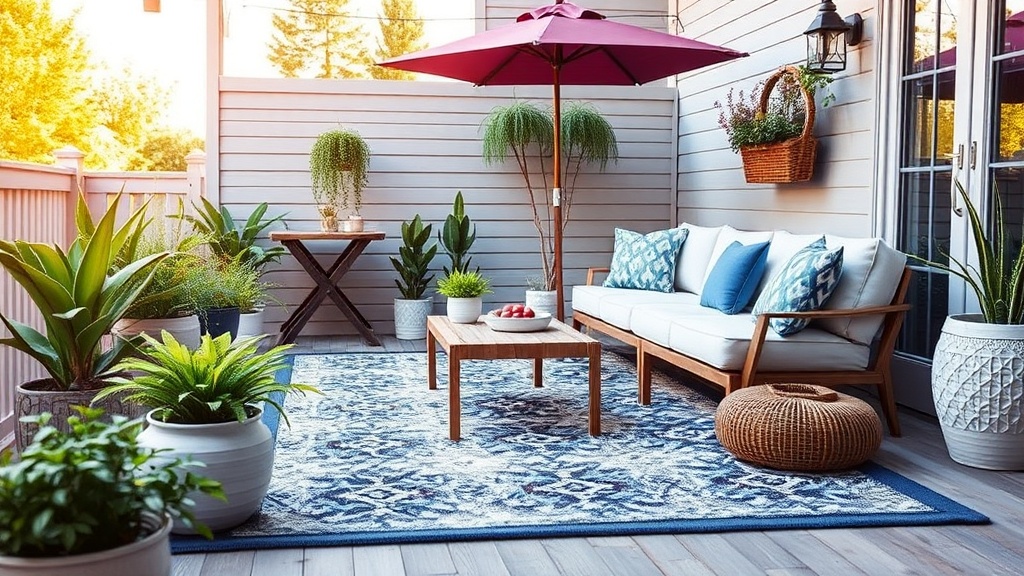
Why Your Outdoor Rug is a Game Changer for Small Patios

Studies in residential design suggest that the visual boundaries of a space dictate how large it feels to the human eye, and a single well-placed outdoor rug can effectively increase the perceived size of a small patio by up to 20 percent. This post explains how an outdoor rug serves as more than just a decorative piece; it is a functional tool for defining zones, protecting your hardscaping, and making a compact outdoor area feel like a high-end living room. Whether you are working with a 10x10 concrete pad or a narrow wooden deck, selecting the right rug can solve common small-space problems like lack of cohesion and uncomfortable footing.
Defining Zones in Tight Quarters
When you are working with a small footprint, the biggest mistake people make is trying to cram too many pieces of furniture into one area without any visual structure. Without a rug, a bistro set and a small side table just look like a collection of random objects sitting on a slab of concrete. An outdoor rug creates a "room" by providing a visual anchor that tells the eye exactly where the living space begins and ends.
For a small patio, I recommend using a rug to create a specific functional zone. If you have a long, narrow balcony or a side yard, don't try to cover the whole thing. Instead, pick one area—like your seating arrangement—and place a rug underneath it. This creates a focal point. For example, if you have a small sectional and a coffee table, a 5x8 rug is often enough to pull those pieces together without swallowing the entire patio. This technique is particularly useful if you also have a fire pit gathering spot nearby; the rug helps distinguish the "lounge" area from the "fire" area, preventing the two zones from bleeding into one messy layout.
The Rule of Scale and Proportion
The most common mistake I see in the field is buying a rug that is too small. A tiny rug under a large dining table looks like a postage stamp and actually makes the space feel smaller and more cluttered. If you are using a standard four-person outdoor dining set, ensure the rug is at least 24 inches wider than the table on all sides so that when guests pull their chairs out to sit, the chair legs stay on the rug. If the chair legs constantly catch on the edge of the rug, it becomes a tripping hazard and a constant annoyance.
- For a Bistro Set: A 3x5 or 4x6 rug is usually sufficient.
- For a Small Sectional: Aim for an 8x10 or at least a 6x9 to ensure the front legs of the sofa are anchored.
- For a Narrow Deck: Use a long, rectangular runner to draw the eye down the length of the space, which can make a short deck feel longer.
Material Selection: Durability Meets Comfort
Unlike indoor rugs, outdoor rugs must withstand UV rays, moisture, and temperature fluctuations. If you buy a cheap indoor-outdoor hybrid from a big-box store that isn't truly rated for UV exposure, you will see it fade and become brittle within a single season. When shopping, look specifically at the fiber content. Polypropylene is the industry standard for a reason: it is highly resistant to moisture, easy to clean, and doesn't rot.
Understanding Common Outdoor Materials
Polypropylene: This is the workhorse of the outdoor rug world. It is essentially a type of plastic that is incredibly durable and resistant to mold and mildew. It’s perfect for high-traffic areas or if you have kids and pets running around. It dries quickly after a rainstorm, which is vital for preventing that musty smell.
PET (Polyethylene Terephthalate): Often made from recycled plastic bottles, PET rugs are softer to the touch than standard polypropylene. If you want your patio to feel more like a high-end sunroom, look for PET. It offers a more "textile" feel while still maintaining weather resistance.
Sisal and Jute: While these natural fibers look beautiful and high-end, I generally advise against them for true outdoor use unless you live in an extremely arid climate like parts of Arizona. In a typical backyard setting, moisture will cause these fibers to expand, mold, and eventually disintegrate. If you love the look of natural fibers, look for a synthetic "faux-jute" rug that provides the aesthetic without the maintenance headache.
Practical Maintenance for Longevity
A rug on a patio is a magnet for organic debris. Leaves, dirt, and even pollen will settle into the weave. If you neglect this, the rug becomes a breeding ground for bacteria and can actually stain your patio surface underneath. To keep a small patio looking professional, you need a regular maintenance routine.
- Weekly Debris Removal: Once a week, use a stiff-bristled broom or a shop vacuum to remove loose dirt and leaves. Do not use a vacuum with a rotating brush head on a delicate weave, as it can snag the fibers.
- Monthly Deep Clean: Every month, hose the rug down thoroughly. Use a mixture of mild dish soap and warm water. Scrub with a nylon brush in a circular motion to lift embedded dirt.
- The "Flip" Method: Twice a year, I recommend flipping your rug over or rotating it 180 degrees. This ensures that sun exposure is even, preventing one side from fading faster than the other.
"Pro Tip: If you have a heavy rainstorm, don't leave the rug sitting in a puddle. Once the rain stops, lift the rug slightly or prop it up with a few bricks to allow airflow underneath. This prevents moisture from getting trapped against your wooden deck or stone patio, which can lead to wood rot or algae growth."
Color and Pattern Strategy for Small Spaces
Color choice is where most people get stuck. In a small space, a bold, high-contrast pattern can actually be overwhelming. If you have a bright red and white geometric pattern on a 5x7 rug, that rug becomes the only thing people see, which can make the patio feel cramped and loud.
For a professional, cohesive look, I suggest one of two directions: Monochromatic Textures or Subtle Patterns.
The Monochromatic Approach
If your patio furniture is a solid color (like black metal or gray wicker), choose a rug in a similar color family but with a different texture. For example, a navy blue rug with a woven, textured pattern adds depth without adding "visual noise." This keeps the space feeling calm and expansive. This is a great way to ground a space if you already have a lot of greenery or colorful flowers nearby.
The Subtle Pattern Approach
If you want a pattern, go for something with a low contrast. A geometric pattern where the colors are only a few shades apart (such as light gray and charcoal) provides visual interest without drawing too much attention to the floor. This allows your eye to travel across the entire patio rather than getting stuck on the rug. This is especially helpful if you are using garden decor like old windows as garden accents, as it keeps the overall aesthetic balanced and intentional.
Protecting Your Hardscape
One often overlooked benefit of an outdoor rug is the protection it provides to your patio surface. If you have a beautiful stamped concrete patio or a high-end porcelain tile, you don't want heavy furniture legs scratching the surface or leaving permanent indentations. A rug acts as a buffer.
However, be careful with certain types of rugs on wooden decks. If a rug sits on a wooden deck for a long time without airflow, it can trap moisture and cause the wood to discolor or even rot. To prevent this, I always recommend using a "rug pad" specifically designed for outdoor use. These pads are usually made of a breathable mesh that allows air to circulate between the rug and the deck, providing a non-slip surface while protecting your investment. If you are working on a stone or concrete patio, a standard rubberized rug pad will help keep the rug from sliding around when people are walking on it, which is a major safety concern in wet weather.
By treating your outdoor rug as a structural element rather than just a piece of decor, you can transform a cramped, utilitarian patio into a sophisticated outdoor living room. Focus on scale, choose durable synthetic fibers, and don't be afraid of subtle colors to keep your small space feeling open and inviting.